
It started in college. I remember waking up one morning in my dorm room and being completely unable to move. My eyes were open, I could see everything, but my body was frozen. Worse, I felt a heavy pressure on my chest and what I can only describe as a dark presence in the room. I tried to scream, but nothing came out. I thought I was dying.
That was my first encounter with sleep paralysis—and unfortunately, not my last.
What Is Sleep Paralysis?
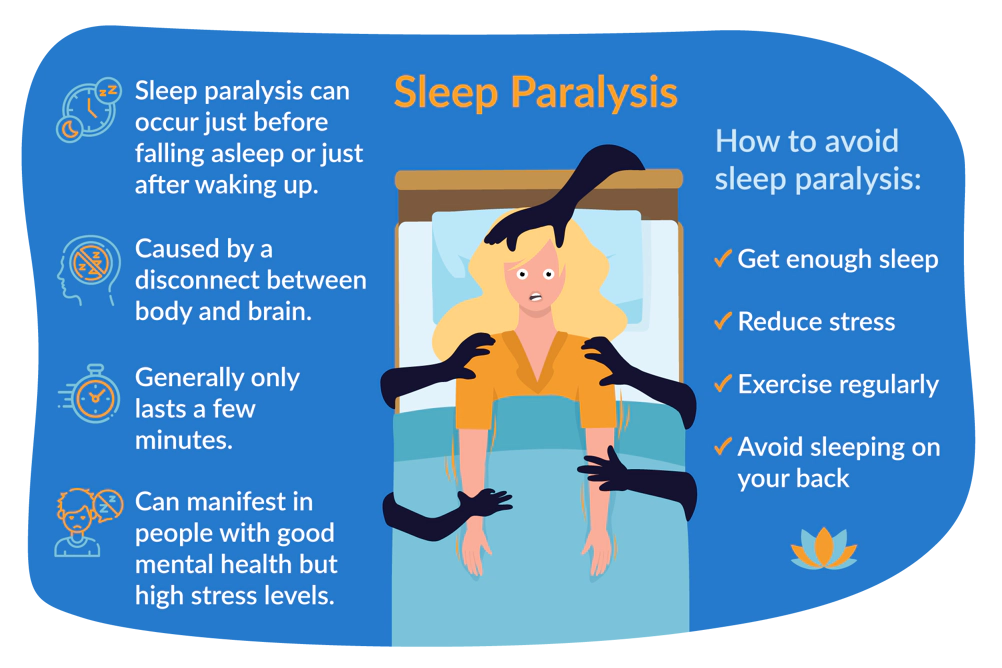
Sleep paralysis is a phenomenon where you wake up, or fall asleep, and for a few terrifying minutes, you can’t move or speak. It’s often accompanied by hallucinations, visual, auditory, and even tactile sensations. Some people report seeing shadowy figures, hearing whispers, or feeling pressure on their chest, a sensation often linked to stories of demonic visits or alien abductions.
It turns out that sleep paralysis is a natural glitch in the sleep cycle. During REM (rapid eye movement) sleep, your body is paralyzed so you don’t physically act out your dreams. If you wake up before the REM cycle ends, your mind becomes conscious while your body is still in that paralyzed state.
My Triggers
I started to notice a few patterns:
- Sleep paralysis often happened after pulling an all-nighter or sleeping irregular hours.
- It was more frequent when I slept on my back.
- It usually occurred when I was under a lot of stress.
I once experienced sleep paralysis three nights in a row during finals week. That’s when I knew I had to figure out how to manage it.
How I Learned to Cope
After some deep research (and talking with a sleep therapist), I learned several techniques that helped me reduce the frequency and fear around sleep paralysis:
1. Sleep Hygiene Matters
Going to bed and waking up at the same time every day was my first step. I also cut back on caffeine after 2 p.m. and limited screen time before bed.
2. Avoid Sleeping on My Back
This alone drastically reduced my episodes. I started using a body pillow to stay on my side, and it made a noticeable difference.
3. Mindfulness and Breathing Techniques
When an episode struck, I learned not to panic. I focused on slow breathing and trying to wiggle my toes or fingers, which helped break the paralysis.
4. Track Sleep and Stress
I kept a sleep journal and started noting when I was more likely to experience an episode. High stress + erratic sleep was almost always the trigger.

What It Taught Me
Sleep paralysis is terrifying, but it’s also harmless. That’s something I had to remind myself constantly. It didn’t mean I was being haunted or going crazy—it was my brain and body being slightly out of sync.
Now, it’s been years since I’ve had a major episode. I still sometimes get that “half-wake” feeling when I’m very stressed, but I know how to deal with it. I recognize the early signs, focus on breathing, and it passes.
Leave a Reply